Personalized Medical Care & Dedicated International Patient Concierge


Medical Guide
Is Cheongdam Idun Clinic Safe for First-Time Patients?
Is Cheongdam Idun Clinic safe for first-time international patients? Review the due-diligence signals, credential checks and questions worth asking first.
Schedule a ConsultationIs Cheongdam Idun Clinic Safe for First-Time Patients?
Medically reviewed by Dr. Seo Young Mee, Founder & Medical Director, Cheongdam Idun Clinic
If you are considering a first visit to a clinic in another country, "Is it safe?" is a natural and important question to ask. It is also a question no honest clinic can answer for you with a simple yes. Safety in medicine is never absolute; it depends on the person, the service, the physician's judgment, and factors that cannot be promised in advance. What a clinic can offer you is not a guarantee but a set of documented, verifiable facts that help you make an informed decision.
This article takes that approach for Cheongdam Idun Clinic, a general-medicine practice in the Gangnam district of Seoul that works with international patients. Rather than offering reassurance, it lays out the concrete signals you can check for yourself, explains what each one does and does not mean, and points out where certain services carry real risks you should weigh carefully. The goal is to help you do your own due diligence, not to replace it. Nothing here is a promise of any particular outcome, and nothing here substitutes for a personal medical evaluation.
What "Safe" Honestly Means for a First-Time Patient
Before looking at specific signals, it helps to set expectations about the word "safe." No clinic, anywhere, can guarantee safety. Every medical service carries some risk, and outcomes vary from person to person. What responsible patients can do is reduce uncertainty by checking facts that are documented and verifiable, and by asking direct questions before committing to anything.
The U.S. Centers for Disease Control and Prevention offers useful guidance for people who travel for medical care. It advises travelers to check a provider's training, qualifications, and reputation, to confirm the facility is appropriate for the treatment being considered, and to plan for follow-up care after returning home. In other words, the CDC frames safety as a process of verification and planning, not as a property a clinic can simply assert. That is exactly the mindset this article encourages. The signals below are meaningful precisely because you can confirm them independently — and a clinic acting in good faith should welcome your checking.
A Government Registration You Can Verify
One documented, checkable fact is Cheongdam Idun Clinic's status under Korea's framework for treating international patients. The clinic is a Registered Medical Institution for Attracting Foreign Patients, a designation administered under the Republic of Korea's Ministry of Health and Welfare. Facilities registered under this framework can be looked up through the official Medical Korea directory maintained with the Korea Health Industry Development Institute.
It is worth being precise about what this registration means. It indicates that a facility has met the requirements to be officially registered to receive international patients within Korea's system — a real, verifiable administrative status. It is not, however, a rating of clinical quality, an endorsement of any specific treatment, or a safety guarantee. Think of it as a baseline fact you can confirm, not a promise of results. Its value is that it is checkable: you can search the official directory yourself rather than relying on a clinic's own description of itself.
A Documented Physician Credential — and What It Is Not
A physician's qualifications are among the few facts you can verify before you ever travel, and they matter most where prescriptions and diagnostics are involved. At Cheongdam Idun Clinic, a documented example is Dr. Jeong Seo In, who holds the credential of a Korean board-certified internal medicine specialist, earned through Korea's recognized specialty training and certification pathway. Her documented training includes an internship at Asan Medical Center and an internal medicine residency at Samsung Medical Center, both large teaching hospitals in Seoul, and she is a member of the Korean Association of Internal Medicine.
Precision matters when reading credentials. This is a Korean specialty certification, not a United States credential — Dr. Jeong is not described as certified by any American board, and applying U.S. terminology to it would misrepresent it. Her society membership reflects participation in a professional community and is a separate matter from the specialty certification itself. The training affiliations are stated here as documented facts, not as a claim of superiority; the name of a training hospital tells you where someone trained, not how any individual patient will fare.
One further distinction deserves emphasis, because it is easy to blur. Functional, longevity, and anti-aging medicine are approaches to care, not recognized medical specialties with their own certifying boards. There is no board certification in longevity medicine within the established specialty system. Physicians who offer such services do so on the foundation of a recognized specialty, with the longevity components layered on top. So the meaningful question is always which recognized specialty a physician is actually certified in — a question you can and should ask directly. You can review the clinic's published physician information on its about-us page and cross-check it against what you learn in a consultation.
Services That Carry Real Risk, Stated Plainly
A trustworthy assessment does not stop at the reassuring facts. Some services offered in longevity- and metabolism-oriented care carry risks and regulatory caveats that a first-time patient should understand plainly.
The clearest example is stem-cell therapy. In the United States, autologous stem-cell treatments are not approved by the U.S. Food and Drug Administration for general anti-aging or longevity purposes, and the FDA has repeatedly warned that unproven stem-cell products can carry serious risks, including infections and other complications. A registration to treat international patients and a well-credentialed physician do not change that regulatory status, and no credential can make an unapproved therapy proven. If any regenerative or stem-cell service is under consideration, the responsible questions are: what is the FDA status of this specific therapy, which physician with which recognized specialty is supervising it, and what are the risks alongside any described benefits?
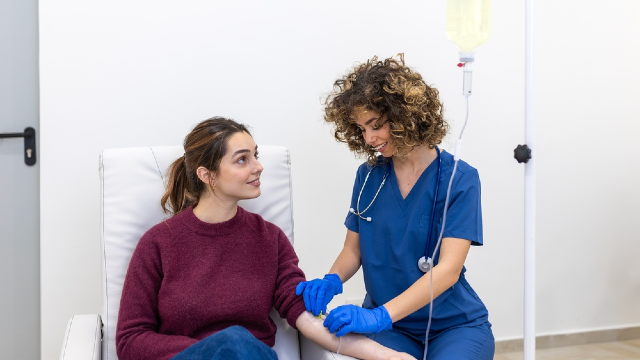
The same honesty applies to advanced or functional testing and to intravenous therapies, many of which are not FDA-cleared or validated for the ways they are sometimes described. These are areas where a physician's candor and judgment matter, and where outcomes vary. Documented signals of trustworthiness are helpful, but they are not a substitute for a frank discussion of risk before you agree to any service.
How to Do Your Own Due Diligence
You do not have to take any clinic's word for its qualifications, and verifying them is a normal part of choosing care abroad. A few practical steps make it manageable. First, ask the clinic directly, in writing, for each physician's specialty, training, and licensure, and ask specifically whether a credential is a specialty board certification or a professional society designation. Second, confirm the facility's registration through the official Medical Korea directory rather than relying only on the clinic's website. Third, for any service you are considering, ask about its U.S. regulatory status and its risks, and be cautious with anything presented as a guaranteed result.
Cheongdam Idun Clinic offers English-speaking support for international patients, including English inquiry by WhatsApp and email and coordinator-mediated English during consultation, and it offers a free pre-arrival virtual consultation by video. Those channels are a practical way to ask your due-diligence questions before you travel. You can begin your review on the Cheongdam Idun Clinic website and raise specific questions through the clinic contact page. Treat everything you learn as a factual starting point for your own decision, not as an assurance.
Frequently Asked Questions
Can Cheongdam Idun Clinic guarantee that my care will be safe?
No responsible clinic can guarantee safety, because every medical service carries some risk and outcomes vary from person to person. What the clinic can offer is a set of documented, verifiable signals — such as its official registration and a physician's specialty credential — that help you make an informed decision. Safety is best approached as a process of verification and planning, which the CDC also recommends for people traveling for care.
What does "Registered Medical Institution for Attracting Foreign Patients" mean?
It is an official designation under the Republic of Korea's Ministry of Health and Welfare indicating that a facility is registered to receive international patients within Korea's system. You can confirm a facility's status through the official Medical Korea directory. It is a verifiable administrative fact, not a quality rating or a safety guarantee.
Is the clinic's physician board-certified?
Dr. Jeong Seo In is documented as a Korean board-certified internal medicine specialist, a credential earned through Korea's recognized specialty training and certification pathway. This is a Korean specialty certification, not a United States credential. She completed an internship at Asan Medical Center and an internal medicine residency at Samsung Medical Center.
Is there a board certification in longevity or functional medicine?
No. Functional, longevity, and anti-aging medicine are approaches to care rather than recognized specialties with their own certifying boards. Physicians who offer these services do so on the foundation of a recognized specialty, such as internal medicine. The meaningful question is which recognized specialty a physician is actually certified in.
Are the clinic's stem-cell or IV services FDA-approved?
In the United States, autologous stem-cell therapy is not FDA-approved for general anti-aging or longevity purposes, and the FDA has warned that unproven stem-cell treatments can carry serious risks. Many IV and functional-testing services are likewise not FDA-cleared or validated for the ways they are sometimes described. These regulatory facts should be discussed openly, and outcomes vary.
How can I verify the clinic's claims before I travel?
Ask for physician specialties, training, and licensure in writing; confirm the facility through the official Medical Korea directory; and ask about the U.S. regulatory status and risks of any service you are considering. The clinic offers English inquiry channels and a free pre-arrival virtual consultation, which are practical ways to ask these questions before committing.
The Bottom Line
- No clinic can guarantee safety; a first-time patient's best tool is verifying documented facts and asking direct questions, as the CDC advises for care abroad.
- Cheongdam Idun Clinic is a Registered Medical Institution for Attracting Foreign Patients under Korea's Ministry of Health and Welfare, a status you can confirm in the official Medical Korea directory.
- Dr. Jeong Seo In is a documented Korean board-certified internal medicine specialist (a Korean, not a U.S., credential); functional and longevity medicine is not itself a recognized certifying board.
- Some services carry real risk: autologous stem-cell therapy is not FDA-approved for anti-aging, and many functional tests and IV therapies are not FDA-cleared or validated for the uses sometimes described.
- Do your own due diligence — verify credentials, confirm registration, and discuss risks and regulatory status openly before agreeing to any service.
Important Disclaimer
This article is for general educational purposes only and is not medical advice, a diagnosis, or a treatment recommendation. It is not a self-diagnosis tool. Some tests and treatments discussed in longevity-, metabolism-, and wellness-oriented care may not be approved, cleared, or validated by the U.S. Food and Drug Administration for the uses people sometimes assume, and individual outcomes vary. The documented signals described here support due diligence but are not a guarantee or assurance of safety. Decisions about care should be made with a qualified physician who has evaluated your personal situation; you can reach the Cheongdam Idun Clinic team or consult another licensed clinician.
More Articles
Continue reading our clinical guides.

Functional Medicine Panel in Seoul Cheongdam Idun Clinic
Discover what is included in a comprehensive functional medicine panel at Cheongdam Idun Clinic in Seoul. Expert biomarker testing led by Asan trained doctors.
Learn More

Botox Seoul 2026: Costs Results And Expert Clinic Guide
Discover the definitive 2026 guide to botox Seoul at Cheongdam Idun Clinic. Get expert insights on costs results and safety from Asan Medical Center specialists.
Learn More
NAD+ IV Therapy for Cellular Energy: An Honest Primer
Learn how NAD+ IV therapy is marketed for cellular energy and aging, what the limited evidence shows, why it is not FDA-approved, and the risks to weigh.
Learn More